
The Role of Opponent Notes: How to Keep a Poker Journal Without Unnecessary Complexity
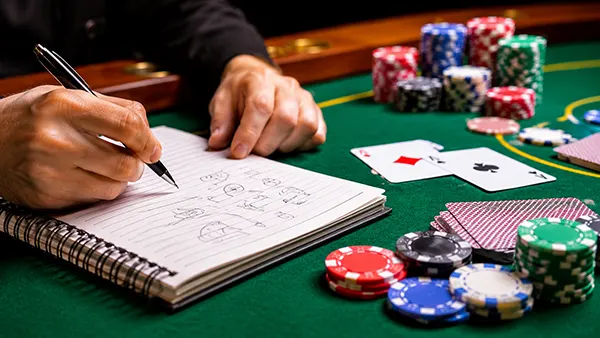
Poker is a game of information, observation, and decision-making. While many players focus on odds, bankroll management, and hand selection, one of the most overlooked tools for long-term improvement is a well-maintained poker journal. Notes about opponents help transform isolated observations into practical knowledge that can be used in future sessions. In 2026, with online poker rooms offering large player pools and regular tables, keeping concise records remains one of the simplest ways to gain an advantage without relying on expensive software or complex statistical databases.
Why Opponent Notes Still Matter in Modern Poker
Many online poker players assume that modern tracking tools have made personal notes obsolete. In reality, notes provide context that statistics often fail to capture. A player may have aggressive numbers over a small sample size, yet detailed notes can reveal that their aggression only appears in specific situations, such as blind-versus-blind confrontations or late-stage tournament play.
Notes are especially valuable in environments where hand histories or third-party tracking applications are restricted. Several poker rooms have tightened policies regarding external software, making personal observations more important than ever. A simple note such as “overbets river with missed draws” can influence a future decision far more effectively than a collection of percentages.
Another advantage is long-term memory. Even experienced players struggle to remember hundreds of opponents encountered over months of play. A short record attached to a player’s profile allows valuable information to remain accessible whenever that opponent appears again at the tables.
Information Worth Recording During Play
The most useful notes focus on actions rather than assumptions. Instead of writing that someone is a weak player, it is better to record a specific situation, such as “called three streets with middle pair” or “raised all-in with a flush draw on the turn.” Concrete examples provide reliable evidence that can be interpreted later.
Attention should also be paid to betting patterns. Some opponents consistently use larger bet sizes when holding strong hands, while others increase aggression as a bluff. Recognising these tendencies allows for more accurate decisions during future encounters.
Emotional behaviour is another important category. Players who become reckless after losing a large pot or who tighten up after suffering several losses often reveal predictable patterns. Recording these reactions helps identify situations where an opponent is likely to deviate from optimal strategy.
Creating a Simple and Practical Poker Journal
A poker journal does not need to resemble a professional database. The most effective journals are often the simplest. The primary goal is to capture useful information quickly enough that it does not interfere with actual gameplay. Many successful players use short codes or abbreviations to save time during sessions.
One practical approach is dividing notes into categories. For example, separate sections can be used for pre-flop tendencies, post-flop behaviour, bluffing frequency, and emotional reactions. This structure makes information easier to review before future sessions and reduces unnecessary clutter.
Consistency is more important than volume. Recording a few meaningful observations after each session produces better results than attempting to document every unusual hand. Over time, even brief notes accumulate into a valuable collection of player-specific information.
How to Review and Update Your Records
A poker journal should remain a living document rather than a static archive. Players evolve, learn new strategies, and adjust their habits. A note written six months ago may no longer accurately describe an opponent’s current approach to the game.
Regular review sessions help maintain accuracy. Before entering a tournament series or cash-game session, spending a few minutes checking existing notes can refresh important details about familiar opponents. This preparation often proves more useful than studying generic strategy material immediately before play.
Outdated observations should be revised or removed when new evidence emerges. If a player previously appeared overly passive but has recently demonstrated frequent three-betting and aggressive post-flop play, the note should reflect those changes. Keeping records current ensures that decisions remain based on relevant information.

Balancing Detail and Efficiency
One of the most common mistakes is collecting too much information. Excessive detail makes notes difficult to read during active play and increases the likelihood that important observations become buried beneath less relevant information.
Effective notes prioritise information that directly influences decision-making. Details about unusual conversations, table chat, or isolated hands with no strategic significance rarely contribute to future profitability. The focus should remain on behavioural patterns that affect betting decisions.
Many experienced players follow a simple rule: if an observation would change a future action, it deserves a place in the journal. If it would not influence a decision, it can usually be ignored. This approach keeps records concise and practical.
Turning Notes into Better Poker Decisions
The real value of opponent notes emerges when information is actively applied. Knowing that an opponent rarely bluffs large rivers may justify a difficult fold. Conversely, recognising a player who frequently attacks perceived weakness can support a profitable call or check-raise.
Notes also improve table selection and game planning. Identifying recreational players, overly aggressive regulars, and predictable opponents allows players to adapt their strategy before significant pots develop. Small informational advantages often compound over hundreds or thousands of hands.
A well-maintained poker journal is not about creating a complicated analytical system. Its purpose is to preserve observations that would otherwise be forgotten and transform them into actionable insights. By focusing on relevant behaviours, updating records regularly, and maintaining a simple structure, players can gain a practical edge that remains valuable in both online and live poker throughout 2026.