
Double Exposure Blackjack: How Rule Changes Influence the House Edge
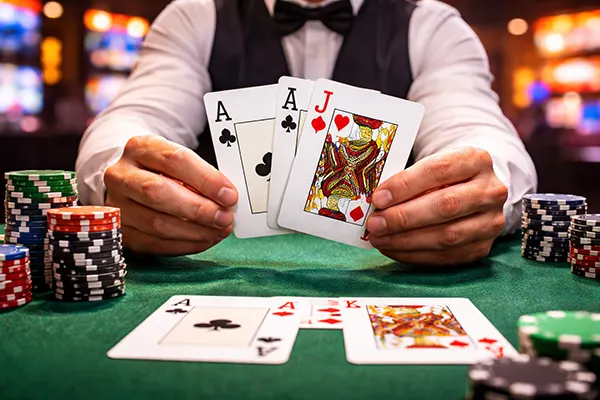
Double Exposure Blackjack looks familiar at first glance, yet one rule immediately changes the dynamic: both dealer cards are dealt face up. This transparency feels advantageous, but the game compensates with altered payouts and stricter conditions. Understanding how these adjustments shift the mathematical balance is essential for anyone assessing risk, expected return, and long-term outcomes in 2026.
What Makes Double Exposure Blackjack Structurally Different
In classic blackjack, uncertainty around the dealer’s hidden card creates a layer of probability management. Double Exposure removes this uncertainty entirely. Players see both dealer cards before making decisions, which theoretically allows for more accurate strategic choices. However, this advantage is counterbalanced through changes elsewhere in the ruleset.
The most noticeable adjustment is the payout structure. Natural blackjacks typically pay 1:1 instead of the traditional 3:2. This single change significantly increases the house edge, as blackjacks are among the most valuable outcomes for players in standard games. Reducing their payout directly lowers player returns over time.
Another structural difference lies in tie outcomes. In most Double Exposure variants, ties result in a loss for the player rather than a push. This rule alone shifts a substantial percentage of otherwise neutral results into losses, quietly but consistently favouring the house.
How Visible Information Changes Decision-Making
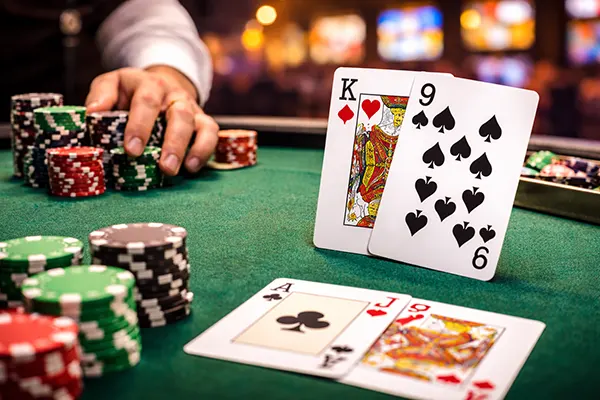
Seeing both dealer cards alters the entire decision tree. Players can calculate exact probabilities for busting or winning rather than relying on estimations. For example, if the dealer shows a total of 16, the player knows the dealer must draw, eliminating guesswork.
This clarity allows for more aggressive or conservative play depending on the situation. Players may stand more often when the dealer is likely to bust or hit more confidently when they know the dealer has a strong hand. In theory, this reduces mistakes caused by incomplete information.
Despite improved decision-making, the rule adjustments ensure that optimal play still results in a higher house edge than standard blackjack. The additional information does not fully compensate for the reduced payouts and stricter tie rules.
Key Rule Adjustments That Increase the House Edge
The most impactful change remains the blackjack payout reduction. Moving from 3:2 to 1:1 effectively removes a large portion of the player’s expected value. Over hundreds of hands, this difference becomes mathematically significant, even if it seems minor in isolated sessions.
Tie-loss rules further amplify the house advantage. In standard blackjack, pushes occur frequently and help stabilise bankroll variance. In Double Exposure, these situations become direct losses, increasing volatility and accelerating potential losses over time.
Restrictions on doubling and splitting are also common. Some versions limit doubling to specific hands or reduce flexibility when splitting pairs. These constraints reduce the player’s ability to maximise favourable situations, subtly reinforcing the house edge.
Why the House Edge Remains Higher Despite Transparency
At first glance, full visibility of dealer cards appears to favour the player. However, casinos adjust multiple variables simultaneously. Each rule change—lower payouts, tie losses, and restricted actions—works together to offset the informational advantage.
Mathematically, Double Exposure Blackjack often carries a house edge of around 0.7% to 1.5% when played optimally, depending on the exact rules. This is higher than many standard blackjack variants that can fall below 0.5% with correct strategy.
The balance is carefully engineered. While players feel more in control due to visible information, the underlying structure ensures that long-term returns still favour the house more strongly than in traditional formats.
Strategic Adjustments for Players in 2026
Optimal strategy in Double Exposure Blackjack differs noticeably from classic basic strategy charts. Since both dealer cards are visible, players must adjust their decisions based on exact totals rather than probabilities derived from hidden information.
Standing becomes more common when the dealer shows a weak total, while hitting is more aggressive when the dealer has a strong hand. These shifts reduce uncertainty but require disciplined execution, as deviations quickly impact expected value.
Bankroll management also becomes more important due to increased volatility. With ties counting as losses and reduced payouts, losing streaks may occur more frequently, even when decisions are statistically correct.
Is Double Exposure Blackjack Worth Playing
From an analytical perspective, Double Exposure Blackjack is less favourable than well-structured standard blackjack games. The higher house edge and reduced payouts make it a less efficient option for long-term value.
However, the format offers a different type of engagement. Players who prefer transparency and clear decision-making may find it more appealing, especially when comparing hands without hidden variables.
Ultimately, the game is best approached with a clear understanding of its mechanics. Recognising how each rule impacts expected return allows players to make informed choices rather than relying on the illusion of advantage created by visible dealer cards.