
Mathematical Paradoxes in Blackjack: When Intuition Turns Against Optimal Strategy
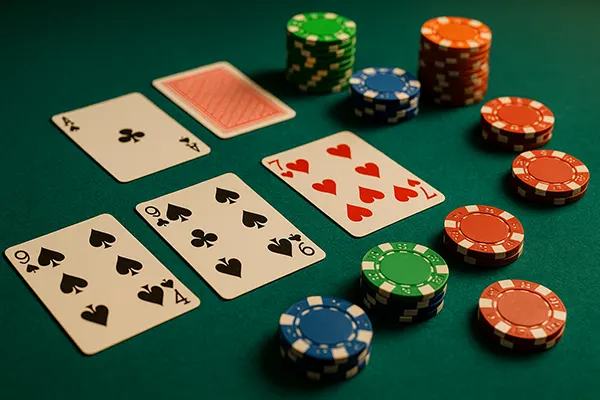
Blackjack is often perceived as a straightforward card game where quick decisions and instinct guide each round. Yet many situations challenge common sense, especially when mathematical principles lead to choices that feel counter-intuitive. Understanding these paradoxes helps players make informed decisions that align with proven probabilities rather than emotions or assumptions.
The Counter-Intuitive Logic Behind Hitting on a Strong Hand
One of the most discussed paradoxes involves taking a hit when holding what seems like a solid hand. Many players hesitate to risk breaking when they already sit at totals such as 12 or 13, especially if the dealer shows a low card. However, probability tables demonstrate that standing too early can reduce long-term performance. The key is not the comfort of the current total but the comparative odds of the dealer’s hand improving.
For example, holding 12 against the dealer’s 2 or 3 appears stable at first glance. Still, statistics show that hitting increases the chance of achieving a competitive total. The fear of going over 21 often overshadows the mathematical edge gained by taking the extra card. This contradiction between feeling safe and making the favourable choice illustrates why blackjack requires discipline over instinct.
Another layer of this paradox emerges when players consider the dealer’s strict rules. Since the dealer must hit until at least 17, even seemingly weak starting cards can evolve into strong totals. Playing passively in these moments benefits the house rather than the player, despite the initial impression that avoiding risk preserves the hand. The paradox lies in the player’s reluctance to engage with statistical reality.
Why Risk Is Sometimes the Rational Option
From a mathematical standpoint, taking calculated risks is not reckless behaviour but a method to reduce expected losses. Probability analysis consistently shows that standing on vulnerable totals leads to losing more frequently over large sample sizes. The irrational fear of breaking overshadows the mathematically justified decision to play actively.
The paradox becomes clearer when comparing short-term and long-term outcomes. In isolated hands, avoiding risk may feel successful because players remember moments when they would have exceeded 21. Over hundreds or thousands of hands, however, the advantage shifts dramatically. The correct strategic move accounts for overall performance rather than isolated incidents.
Ultimately, understanding this paradox requires shifting perspective from emotional safety to mathematically grounded decision-making. Taking a hit with a marginal total is not a leap of faith but an informed adjustment to the dealer’s probabilities and game mechanics.
The Controversial Nature of Doubling Down on Weak Totals
Another paradox occurs when doubling down on totals that appear too weak to justify an increased wager. Many players assume that doubling should only occur when holding a strong advantage. Strategic charts from reputable sources, however, recommend doubling on hands such as 9 or even soft 13 against certain dealer cards. This contradicts instinct yet aligns with long-term profitability.
This paradox stems from misunderstanding the value of positional advantage. The dealer’s visible card sets the probabilities for the rest of the round. When the dealer shows 4, 5 or 6, there is a heightened chance of breaking. In these situations, doubling with a weaker total capitalises on the statistical weakness of the dealer rather than the strength of the player’s starting hand.
Players often struggle with this logic because it conflicts with their view that only strong totals justify higher stakes. However, blackjack strategy is not based on subjective comfort but on expected value calculations. Doubling on a borderline hand leverages favourable dealer conditions, even if the player’s own total feels insufficient.
The Mathematics That Justify the Strategy
Expected value is the foundation of this paradox. When doubling down, the player commits to exactly one additional card. The focus shifts from reaching 21 to outperforming the dealer’s likelihood of breaking. In favourable scenarios, the expected return on a weak doubled hand can exceed the return of playing the hand normally.
Another important aspect involves the dealer’s forced movements. The inflexibility of the dealer’s rules creates predictable patterns that the player can exploit. While doubling may feel bold, it is often the statistically rational action when the dealer has limited room to improve their hand.
Long-term simulation models confirm the strength of this paradoxical strategy. Results show that doubling on certain weak totals increases expected profit, even when individual hands may not feel promising. Accepting this paradox transforms a player’s approach to tactical decisions.
Standing on Soft Hands: When Flexibility Creates Confusion
Soft hands are another source of confusion. The ability to treat an Ace as either 1 or 11 provides flexibility, yet this same flexibility leads players to misunderstand optimal strategy. Many stand on soft totals such as soft 18, assuming that the hand is strong enough. Mathematical models show, however, that the correct move is often to hit or double, depending on the dealer’s card.
The paradox arises because soft hands feel safer than hard hands. The possibility of not breaking encourages players to treat soft totals as final rather than adjustable. In reality, soft hands are designed to be improved aggressively. Standing too early wastes the structural advantage that the Ace provides.
A further complication lies in the dealer’s potential outcomes. If the dealer shows a strong card, players often freeze out of caution. Yet the logic of soft hands encourages active play. Maximising the flexibility of the Ace creates more favourable long-term outcomes, even when it feels risky in the moment.
The Strategic Benefit of Soft Hands
Soft hands allow players to apply pressure without carrying the same level of risk. Understanding this principle is crucial to making correct decisions in scenarios where intuition would otherwise suggest caution. The Ace acts as a safety mechanism that supports more assertive play.
The paradox strengthens because players often mistake stability for strength. Soft 18 may look impressive, but against certain dealer cards it loses more often than expected. Hitting or doubling can shift the odds significantly, even though doing so may appear unnecessary.
Recognising the mathematics behind soft-hand decisions helps players break free from intuition-based mistakes. By embracing the flexibility of these hands, players gain strategic depth that aligns with the proven dynamics of blackjack probabilities.